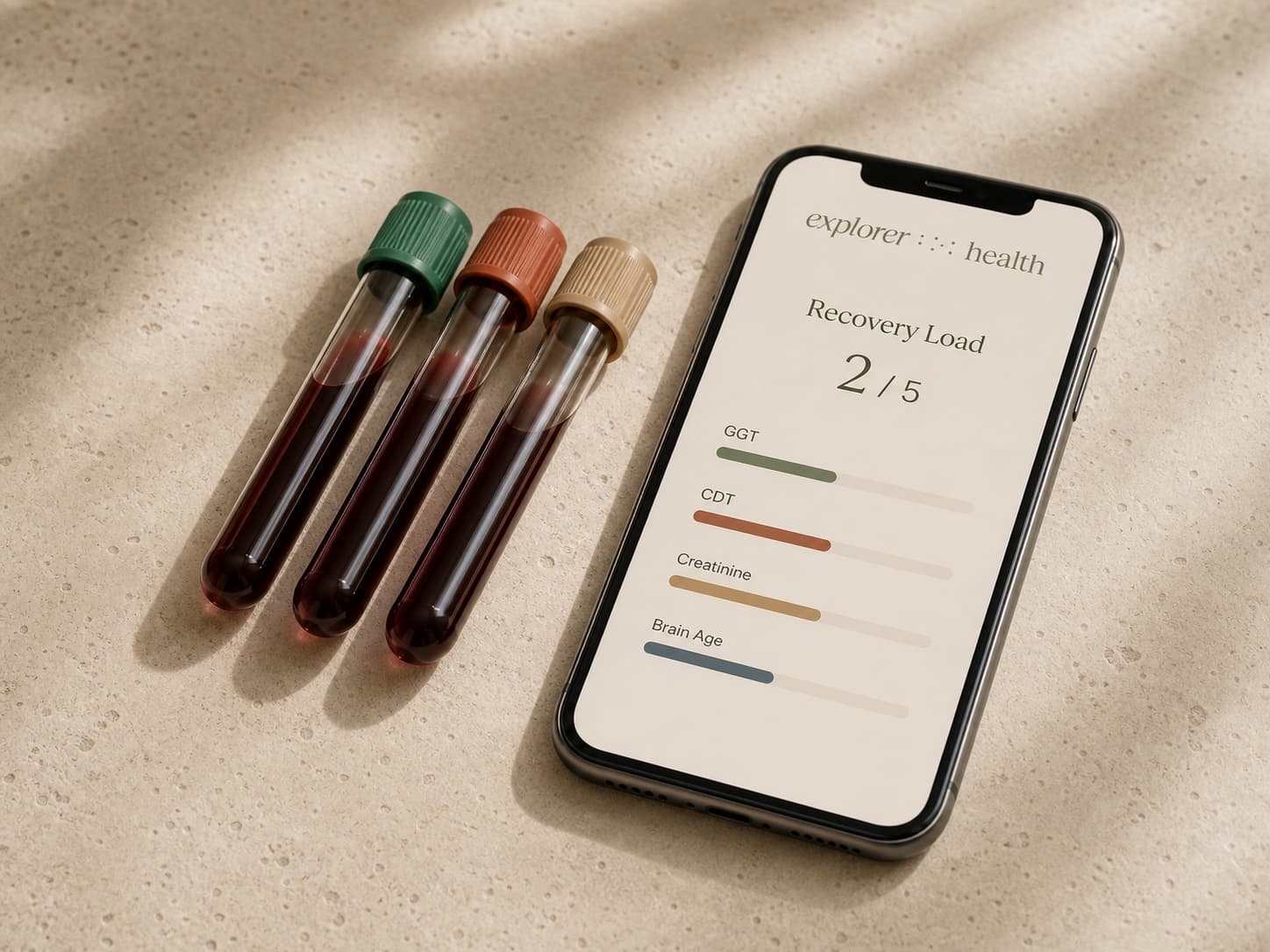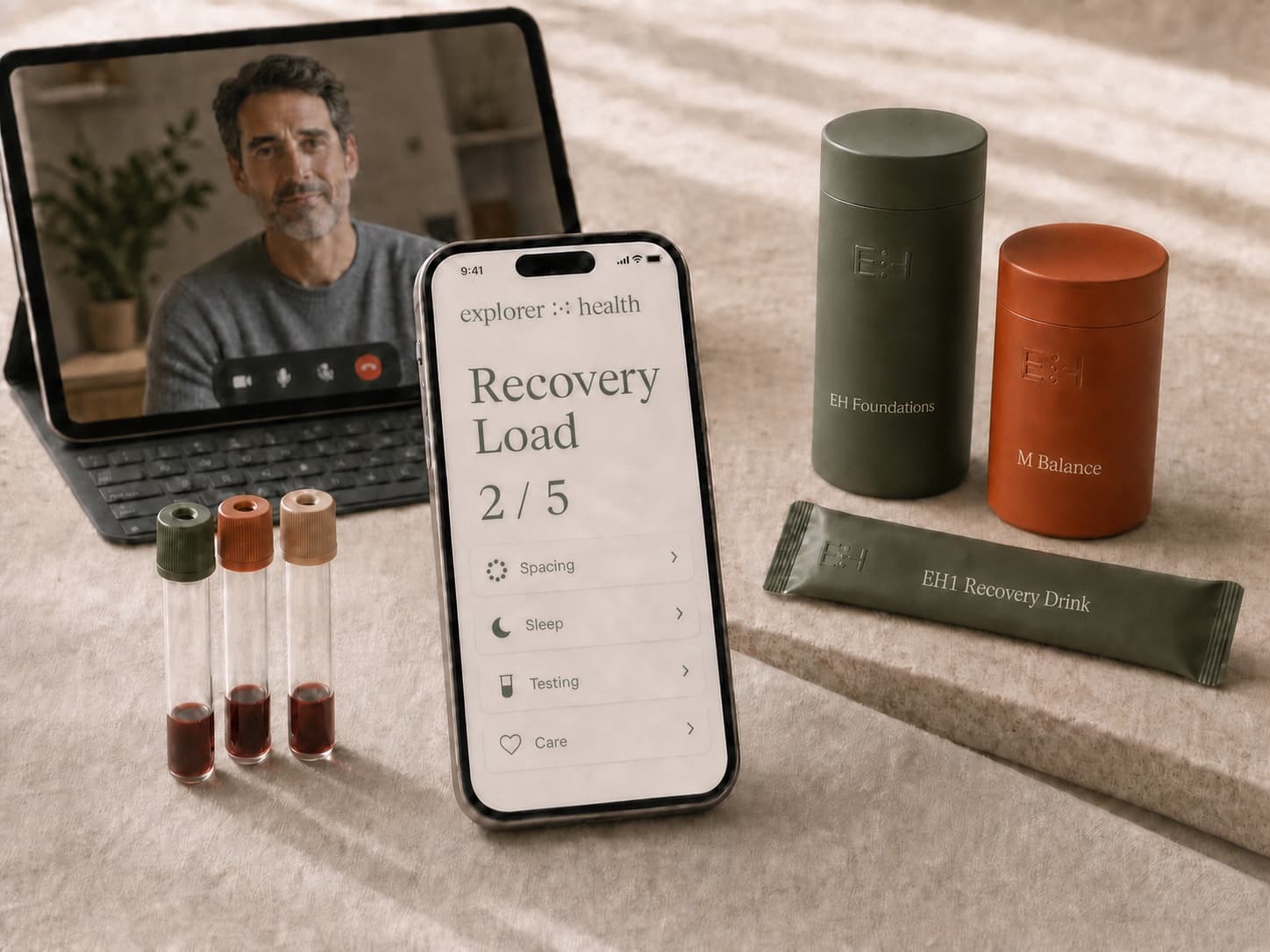
Your Recovery Read
Ketamine + Alcohol + Nicotine
Moderately elevated
Your reported ketamine and alcohol use accounts for most of this estimate. Patterns like this are commonly discussed with a clinician in relation to bladder and liver health.
This is an educational estimate based on what you reported — not a clinical measurement or a comparison to a validated population.
What's worth watching
- Bladder· from KetamineElevated
Ketamine-related bladder injury can progress quietly, and symptoms are often attributed to something else. Early evaluation matters more than any single result.
What clinicians look at: Urinary symptoms with regular ketamine use are typically evaluated with urinalysis and kidney function testing. No single test rules ketamine-related bladder injury in or out.
- Liver· from AlcoholElevated
Regular alcohol use is associated with liver strain and thiamin depletion. Biomarkers contribute to a clinical picture but do not on their own establish whether changes are reversible.
What clinicians look at: Clinicians assessing alcohol-related liver strain often look at GGT and CDT alongside symptoms and history.
- Cardiovascular· from NicotineBorderline
Nicotine is associated with vascular strain. Much of the cardiovascular risk declines after cessation.
What clinicians look at: Blood pressure and a lipid panel are the standard cardiovascular baselines.
Working in your favor
- Sleep & exercise· protective factorStrong
Sleep & exercise — actively buffering your load.
Protects: recovery load · nervous system
Worth bringing to a clinician.
These are the areas your answers touch on most. A clinician can decide what, if any, testing makes sense for you.
See what testing involves →Educational estimate based on self-reported information — not a diagnosis, and not clinically validated. Stored under a random ID without your name or contact details. Explorer Health does not automatically share it with a doctor, employer, or insurer.